15 Budget-Friendly Garage Organization Ideas for 2026

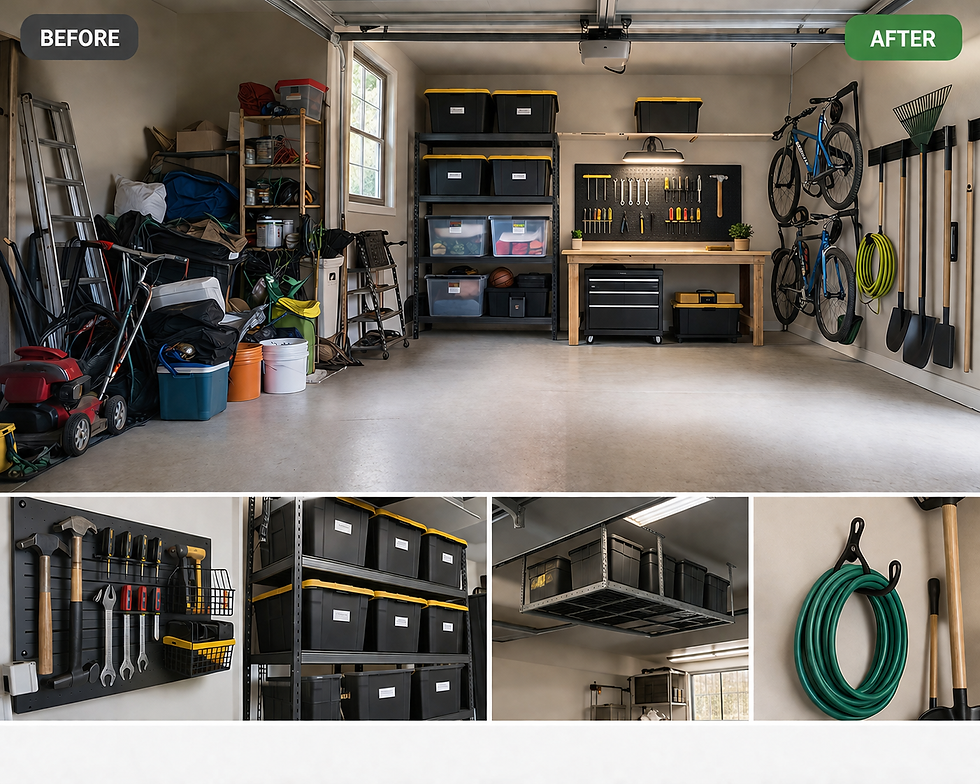
Garages have a way of turning into dumping grounds. Holiday decorations pile up next to bikes, tools go missing under stacks of boxes, and suddenly there's no room to park the car. If that sounds familiar, budget-friendly garage organization ideas can turn things around without a big renovation.
You don't need custom cabinets or a professional installer to get an organized garage. With a bit of planning and some inexpensive materials, you can build storage that actually works for your space. This article covers affordable DIY options for tools, sports gear, seasonal items, and everything in between.
Below, you'll find a simple decluttering process, 15 budget-friendly DIY ideas, small-space strategies, common mistakes to avoid, and a maintenance routine that keeps your garage from sliding back into chaos. Read on.
How to Organize a Garage on a Budget
The fastest way to organize a garage on a budget is to declutter first, then add only the storage you actually need. Buying bins and shelving before sorting through your stuff almost always leads to wasted money and wasted space.
Follow this simple process before you build or buy anything:
Remove everything from the floor. Pull everything out, even if it means your driveway looks chaotic for a day. Seeing everything at once makes sorting much easier.
Sort items by category. Group tools with tools, sports gear with sports gear, and seasonal items together. This step reveals how much of each category you actually own.
Decide what to keep, donate, sell, or discard. Be honest about what you actually use. If you haven't touched something in over a year, it's a strong candidate to go.
Measure available storage areas. Check your wall space, ceiling height, and floor footprint before buying anything.
Use vertical space. Walls and ceilings are usually the most underused storage areas in a garage.
Create designated zones. Assign a specific area for each category, so items have a clear home.
Choose affordable storage solutions. Once you know what you're storing and where, pick the cheapest option that does the job well.
This process takes a weekend for most garages, but it's worth doing thoroughly. Skipping the decluttering step is the single biggest reason garage organization projects fail.
15 Budget-Friendly DIY Garage Organization Ideas
You don't need to use every idea on this list. Pick the ones that match your space, budget, and the items you actually need to store, and combine them into a system that works for your household.
1. Build Simple DIY Garage Shelves
Basic shelving is one of the most affordable garage storage ideas available. A simple frame built from plywood and 2x4 lumber can hold a surprising amount of weight for very little cost.
Use wall space efficiently by building shelves that run the length of an open wall. Reserve the sturdiest, lowest shelves for heavy items like paint cans or power tools, and use higher shelves for lighter things you don't need often. Always check the manufacturer's weight guidance for any shelving unit you buy, and don't guess when it comes to heavier stored items.
2. Install a Budget-Friendly Pegboard
A pegboard turns a blank wall into flexible storage for hand tools and small equipment. Hooks and holders can be rearranged at any time, making pegboards especially useful as your tool collection grows or changes.
Pegboards work well for items you reach for often, since everything stays visible and within arm's reach. Hammers, wrenches, pliers, and measuring tapes all hang neatly instead of getting buried in a drawer.
3. Use Wall-Mounted Storage Hooks
Heavy-duty wall hooks are cheap, simple, and surprisingly versatile. They work well for garden tools, ladders, extension cords, and other outdoor equipment that doesn't fit neatly on a shelf.
Hooks free up floor space immediately, which matters most in smaller garages. Mount them at a height that's easy to reach, and space them out so hanging items don't bump into each other.
4. Repurpose Old Cabinets and Furniture
Old furniture headed for the curb can often find a second life in the garage. Cabinets, bookcases, and dressers all provide closed storage without the cost of buying new garage-specific units.
Wooden crates are another great option, since they stack easily and can hold anything from tools to sports gear. This approach is one of the cheapest garage storage ideas simply because you're reusing what you already have instead of buying new.
5. Create a Dedicated Tool Organization Zone
A dedicated tool zone keeps your most-used items in one predictable place. Group tools by how you use them, such as woodworking tools in one area and automotive tools in another.
Keep frequently used tools within easy reach, and store rarely used specialty tools further back or higher up. Label drawers and containers clearly, so you're not digging through several bins to find one wrench.
6. Use Clear Storage Bins
Clear bins let you see what's inside without opening every container. This small feature saves a surprising amount of time when you're searching for seasonal decorations or spare hardware.
Good candidates for bin storage include:
Seasonal decorations
Extra hardware like screws and brackets
Cables and cords
Small accessories and spare parts
Even with clear bins, labeling helps. Contents can shift or become hard to identify at a glance, especially with small parts.
7. Make Use of Ceiling Storage
Ceiling space is one of the most overlooked storage areas in a typical garage. Overhead racks work well for seasonal items, lightweight gear, and equipment you only need a few times a year.
Overhead storage safety deserves real attention here, since a failed installation can be dangerous. Most residential overhead racks are rated for roughly 250 to 600 pounds depending on the model, but that rating only holds if the rack is installed correctly.
Keep these safety points in mind:
Anchor into ceiling joists, not drywall alone. Drywall can't support meaningful weight on its own.
Respect the weight limit printed on the rack, and avoid loading it anywhere near the maximum for extra safety margin.
Distribute weight evenly across the rack rather than clustering heavy items in one spot.
Check ceiling height. Most garages need at least 8 feet of clearance for overhead storage to work well without interfering with daily use.
Inspect periodically. Vibration, rust, and loosening fasteners can weaken a rack over time, so an annual check is a smart habit.
If you're unsure about your ceiling structure or installation, it's worth consulting a professional installer or your rack's manufacturer guide rather than guessing.
8. Create a DIY Bike Storage Area
Bikes take up a lot of floor space when they're just leaned against a wall. Wall-mounted hooks or vertical bike racks lift bikes off the ground and free up significant room.
Vertical storage works especially well in narrow garages, since bikes hang flat against the wall instead of sticking out into the walkway. Keep bike storage away from your main walking path so you're not squeezing past handlebars every time you park.
9. Build a Simple Garage Workbench
A basic workbench gives you a dedicated workspace instead of using the hood of your car or the garage floor. Reclaimed lumber or an old door on sturdy legs can work just as well as a store-bought bench.
Add storage underneath using bins, open shelving, or small drawers. This turns dead space beneath the bench into useful storage for tools you use during projects.
10. Use PVC Pipes to Organize Long Tools
Long-handled tools like rakes, brooms, and shovels are notoriously awkward to store. Mounting sections of PVC pipe to a wall creates simple vertical slots that keep these tools upright and separated.
This project costs very little and takes less than an hour to install. It's a great example of how a cheap garage organization idea can solve a specific, everyday annoyance.
11. Add a Dedicated Sports Equipment Zone
Balls, bats, helmets, and other sports gear tend to end up scattered across the garage floor. A dedicated zone, even a simple one using bins and hooks, keeps this equipment contained.
Use netted bins or open baskets for balls, since they're easy to toss items into after use. Hang bats, helmets, and other larger items on hooks nearby. Rotate seasonal equipment, like winter sports gear, into higher or less accessible storage during the off-season.
12. Create a Garden Tool Storage Station
Garden tools deserve their own organized station, separate from general hand tools. Hooks and racks designed for garden tools keep shovels, trowels, and hand rakes grouped and easy to grab before yard work.
Vertical storage works particularly well here, since most garden tools are long and awkward to store flat. Group tools by type or by season, so your most-used items stay within easy reach.
13. Use Recycled Jars and Containers for Small Items
Small hardware like screws, nails, bolts, and washers has a way of disappearing into junk drawers. Recycled jars, whether mounted upside down under a shelf or simply lined up on a shelf, give these small items a permanent, visible home.
This is one of the most budget-friendly garage storage ideas on this list, since it costs essentially nothing beyond containers you likely already have. Label each jar so you can identify contents without unscrewing every lid.
14. Create Storage Zones
Zoning your garage means assigning a specific area to each category of item, rather than mixing everything. Common zones include:
Tools
Gardening supplies
Sports equipment
Automotive supplies
Seasonal items
Zoning makes it much easier to maintain organization over time. When everything has a designated spot, it's obvious where an item belongs when you're putting it away.
15. Label Everything
Labels might be the simplest idea on this list, but they make a real difference. Clear labels help you find items quickly, return them to the right spot, and maintain your system over the long run.
Labeling also helps other household members put things away correctly. A system only works if everyone using the garage understands where things go.
How to Maximize Storage Space in a Small Garage
Small garages benefit most from vertical and often-overlooked storage areas. Walls, ceilings, corners, and the backs of doors all offer usable space that's easy to miss.
Vertical walls. Use the full height of your walls, not just the lower few feet within easy reach.
Ceiling space. As covered above, overhead racks work well for lightweight, infrequently used items.
Corners. Corner shelving units make use of space that's otherwise wasted.
Behind doors. Slim hooks or racks mounted on the back of a side door add storage without taking up floor space.
Foldable storage. Fold-down workbenches and collapsible shelving free up floor space when not in use.
Multi-purpose furniture. A workbench with built-in storage, or a bench that doubles as a potting station, does double duty in a small footprint.
In a small garage, think in three dimensions. Floor space is limited, but walls and ceilings almost always have room to spare.
How to Organize a Garage Without Expensive Cabinets
You don't need built-in cabinets to have a functional, organized garage. Open shelving, pegboards, hooks, storage bins, and repurposed furniture all provide reliable storage at a fraction of the cost.
Storage Type | Approximate Cost | Best For |
Open shelving | Low | General storage, bins, boxes |
Pegboard | Low | Small tools, frequently used items |
Wall hooks | Very low | Ladders, cords, garden tools |
Storage bins | Low | Seasonal items, small parts |
Repurposed furniture | Very low to free | Closed storage, odds and ends |
Custom cabinets | High | Built-in, uniform appearance |
Open storage actually offers one advantage cabinets don't: visibility. When items are in the open, on a pegboard or shelf, they're easier to spot and grab quickly. Closed cabinets look tidy, but they can also hide clutter and make it harder to locate things fast.
Common Garage Organization Mistakes to Avoid
Even a well-planned project can go sideways if you fall into a few common traps. Watch out for these mistakes:
Keeping unnecessary items. Holding onto things "just in case" is one of the biggest contributors to garage clutter.
Storing everything on the floor. Floor storage limits parking space and makes cleaning harder.
Ignoring vertical space. Walls and ceilings are often the most underused areas in a garage.
Overloading shelves. Exceeding a shelf's weight rating risks collapse and damage to whatever's stored on it.
Failing to label containers. Unlabeled bins turn into mystery boxes within a few months.
Creating inaccessible storage. Storage you can't easily reach tends to get ignored and eventually forgotten.
Buying storage before decluttering. This leads to storage solutions that don't match what you actually need to store.
Not leaving room for vehicles and walkways. A garage that can't fit your car isn't functioning as a garage.
How to Keep Your Garage Organized
An organized garage stays organized through simple, repeatable habits rather than one big clean-up. Build these routines into your schedule:
Return items after use. Put tools and equipment back in their designated zone right away, not "later."
Perform a monthly reset. Spend 15 to 20 minutes each month tidying up anything that's drifted out of place.
Remove unwanted items regularly. Don't let donation piles sit for months. Drop them off promptly.
Review seasonal storage. Rotate seasonal items in and out as the seasons change, so current gear stays accessible.
Keep frequently used items accessible. Don't bury your everyday tools behind rarely used equipment.
Avoid using the garage as a dumping ground. When something doesn't have a home, decide on one immediately instead of leaving it on the floor.
Budget Garage Organization Checklist
Declutter the garage.
Sort items by category.
Measure available space.
Use vertical storage.
Create storage zones.
Install affordable hooks or shelves.
Label containers.
Keep walkways clear.
Store heavy items safely.
Schedule regular organization sessions.
Frequently Asked Questions
How can I organize my garage cheaply?
Start by decluttering, then add low-cost storage like pegboards, wall hooks, open shelving, and repurposed furniture. Most affordable garage organization ideas rely on making better use of existing wall and ceiling space rather than buying expensive new systems.
What is the cheapest way to add storage to a garage?
Shelves, hooks, pegboards, storage bins, and repurposed furniture are among the cheapest options. Many of these projects use inexpensive materials like plywood, PVC pipe, or items you already own, keeping costs low while still creating functional storage.
How do I organize a messy garage?
Remove everything from the floor, sort items by category, and decide what to keep, donate, sell, or discard. Once you've decluttered, measure your available space and add storage solutions based on what you actually need to store.
How can I maximize space in a small garage?
Focus on vertical storage, including wall-mounted shelving, pegboards, and ceiling racks. Corners and the backs of doors also offer usable space that's easy to overlook in a small garage.
What should I store on garage shelves?
Organize shelf contents by weight, frequency of use, and safety. Keep heavier items on lower, sturdier shelves, and reserve higher shelves for lighter items you use less often. Always check a shelf's weight rating before loading it.
How do I keep my garage organized long term?
Build simple habits, like returning items after use and doing a monthly reset. Designated storage zones make it easier to maintain order, since every item has a clear, consistent home.
Conclusion
An organized garage doesn't require an expensive renovation or custom cabinetry. With a handful of budget-friendly garage organization ideas, from pegboards and wall hooks to repurposed furniture and simple DIY shelves, you can make far better use of the space you already have.
Vertical and ceiling storage can significantly increase your garage's capacity, as long as safety comes first. Decluttering before you buy anything saves money and prevents wasted storage. Small, consistent maintenance habits are what keep a garage organized long after the initial project is done.
Start with one area, whether that's a cluttered corner or an overflowing shelf. Clear it out, apply one or two ideas from this list, and build your system gradually from there. A functional, budget-friendly garage is well within reach.


Comments