Best Home Workouts for Beginners: Stay Fit Without a Gym Membership

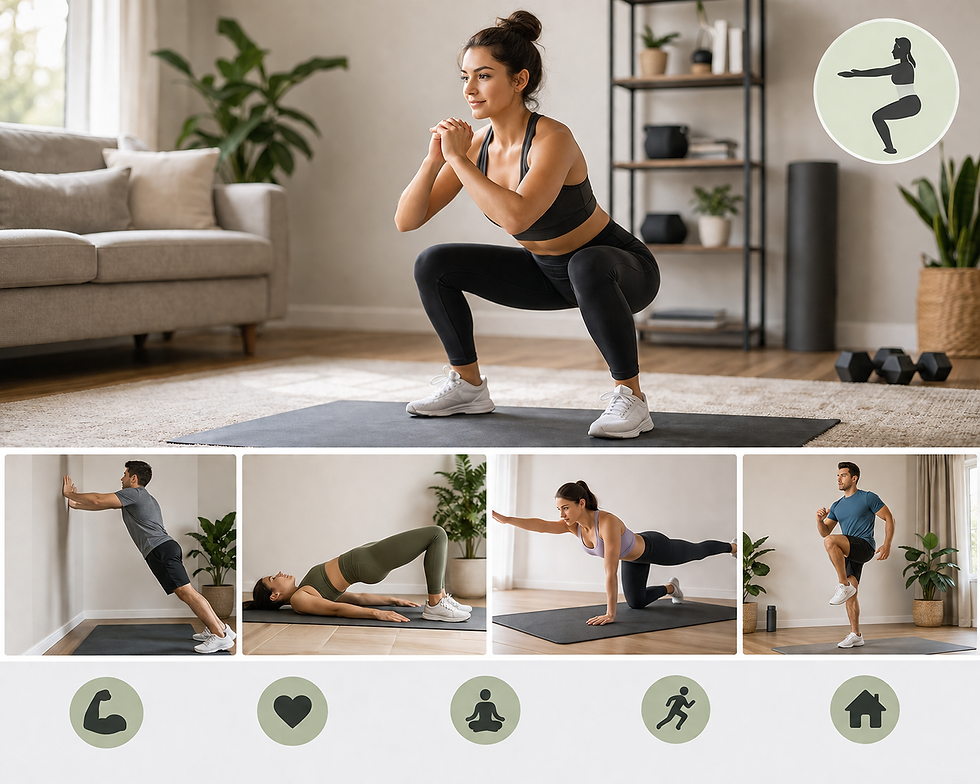
Starting a fitness routine can feel intimidating, especially if the idea of walking into a gym stresses you out more than it motivates you. The good news is that some of the best home workouts for beginners require nothing more than a small patch of floor space and a few minutes of your day.
Starting small is often what makes exercise sustainable in the long run. You don't need a treadmill, a rack of dumbbells, or a monthly membership to build real fitness. Many effective exercises use only your body weight, which makes them accessible no matter your budget or living situation.
This blog covers why home workouts make sense for beginners, what to know before you start, and a full lineup of no-equipment exercises. You'll also find a sample routine, guidance on how often to train, and tips for staying consistent long after the first week of motivation fades.
Why Home Workouts Are a Good Option for Beginners
Home workouts remove many of the barriers that keep beginners from exercising consistently. That alone makes them worth considering, even if you eventually want to join a gym down the road.
Here's what makes home fitness for beginners appealing:
Convenience. There's no commute involved. Your workout space is wherever you are.
Privacy. Some beginners feel self-conscious exercising around others. A home workout removes that pressure entirely.
Lower cost. Bodyweight exercises require no equipment and no membership fees.
Flexible scheduling. You can train early in the morning, during a lunch break, or late at night, whatever fits your day.
Easy access. There's no waiting for equipment or navigating a crowded gym floor.
Ability to start gradually. You control the pace completely, without feeling rushed or observed.
The best workout for a beginner isn't the most intense one available. It's the one you can perform consistently and safely, week after week.
What Beginners Should Know Before Starting Home Workouts
A few basic principles make the difference between a beginner routine that sticks and one that leads to frustration or injury. Keep these in mind before your first session.
Start at a manageable level. It's tempting to push hard on day one, but easing in protects both your motivation and your body.
Focus on proper form. Correct technique matters more than speed or repetition count, especially when you're still learning a movement.
Increase difficulty gradually. Small increases over time build real progress without overwhelming your body.
Allow time for rest and recovery. Muscles adapt and strengthen during rest, not just during the workout itself.
Stop if an exercise causes pain. Discomfort from effort is normal. Sharp or persistent pain is a signal to stop.
Adapt movements to your individual ability. Every exercise in this article can be modified to match your current fitness level.
If you have an existing health condition, are recovering from an injury, or haven't exercised in a long time, it's worth talking with a doctor or qualified health professional before starting a new fitness routine. This guide offers general, educational information rather than personalized medical advice.
The Best Types of Home Workouts for Beginners
A well-rounded beginner routine draws from several categories of movement rather than focusing on just one. Combining different types creates a more complete, balanced approach to fitness.
Bodyweight strength exercises, which build muscle and functional strength using just your own body.
Low-impact cardio, which raises your heart rate without heavy strain on your joints.
Mobility exercises, which keep your joints moving through a full, comfortable range of motion.
Flexibility exercises, which help muscles stay loose and reduce stiffness.
Balance and coordination exercises, which support stability and everyday movement quality.
You don't need to master every category before starting. Even a routine that touches on two or three of these areas offers real benefit, and you can round out the rest as you go.
Beginner-Friendly No-Equipment Exercises to Try at Home
These eight exercises form a solid foundation for any beginner home workout routine. Each one can be adjusted to match your current ability, so don't worry if a beginner-level version still feels challenging at first.
1. Bodyweight Squats
Bodyweight squats are one of the most useful beginner exercises at home, since they train several major muscle groups at once, including the legs and glutes.
Stand with your feet roughly shoulder-width apart. Bend your knees and hips together, lowering as if sitting back into a chair, then push back up to standing. Keep your chest lifted and your weight balanced through your feet.
Common form mistakes to avoid:
Letting the knees collapse inward
Rounding the back forward
Rising up onto the toes instead of staying grounded through the whole foot
Beginner modification: Squat to a chair or sturdy surface behind you, lightly tapping it before standing back up. This shortens the range of motion and adds a safety check for balance.
2. Wall Push-Ups
Wall push-ups are one of the easiest push-up alternatives for beginners, since they reduce the amount of body weight you're pressing compared to a floor push-up.
Stand facing a wall, arms extended, hands placed slightly wider than shoulder-width. Bend your elbows to bring your chest toward the wall, then press back to the starting position. This builds the same pushing pattern as a floor push-up, just with less resistance.
As this becomes easier, you can progress to an incline push-up using a sturdy table or countertop, and eventually a full floor push-up.
3. Glute Bridges
Glute bridges are a beginner-friendly lower-body exercise that strengthens the glutes and hamstrings while staying gentle on the knees.
Lie on your back with your knees bent and feet flat on the floor, hip-width apart. Press through your heels to lift your hips toward the ceiling, squeezing your glutes at the top, then lower back down with control.
Focus on a slow, controlled movement rather than rushing through repetitions. As you build strength, you can add a brief pause at the top of each repetition for an extra challenge.
4. Marching in Place
Marching in place is a simple way to add low-impact cardio to a home routine without any jumping or high-impact movement.
Stand tall and lift one knee toward your hip, then alternate sides, as if marching. Swing your arms naturally to add a bit more intensity. This movement is gentle enough for a warm-up but can also serve as light cardio on its own when done for a few continuous minutes.
5. Step-Back Lunges or Supported Lunges
Lunges are effective for building leg strength, but a full walking lunge can be tricky for beginners still working on balance.
Step one foot backward, bending both knees to lower into a lunge position, then step back to standing. If balance is a concern, hold onto a wall or sturdy chair with one hand for support. You can also reduce how far you step back or how deep you lower, adjusting the range of motion to whatever feels stable and controlled.
6. Bird-Dog Exercises
Bird-dogs are a beginner core exercise that also builds coordination and control, since you're balancing while moving opposite limbs at once.
Start on your hands and knees. Extend one arm forward while extending the opposite leg backward, keeping your hips and shoulders level and your core engaged. Hold briefly, then return to the starting position and switch sides.
Move slowly and focus on stability rather than speed. Wobbling is normal at first, and control improves with practice.
7. Modified Planks
Planks are a classic core exercise, but a full forearm plank can be demanding for someone just starting out.
Begin on your hands and knees, then lower onto your forearms if you're building up to a full plank, or keep your knees on the ground for a modified version. Keep your body in a straight line from head to knees (or head to heels, in the full version), engaging your core throughout.
Hold for a short duration that you can maintain with good form, even if that's just 10 to 15 seconds at first. Quality holds beat long holds with poor form every time.
8. Standing Mobility Exercises
Standing mobility work keeps your joints moving comfortably and can be done as part of a warm-up or as its own short routine.
Gentle movements to include:
Shoulders: slow arm circles in both directions.
Hips: standing hip circles, shifting your weight and rotating gently.
Back: gentle standing twists, rotating your upper body side to side.
Ankles: ankle circles, rolling each foot slowly in both directions.
These movements are low intensity but valuable, especially for beginners who spend much of the day sitting.
A Simple Beginner Home Workout Routine
Here's a straightforward structure that combines several of the exercises above into one complete session. Adjust repetitions, hold times, and difficulty based on your current fitness level.
Warm-Up (3 to 5 minutes)
Marching in place
Gentle arm circles
Standing mobility exercises for hips and shoulders
Main Workout (15 to 20 minutes)
Perform 2 to 3 rounds of the following, resting briefly between exercises as needed:
Bodyweight squats, 8 to 12 repetitions
Wall push-ups, 8 to 12 repetitions
Glute bridges, 10 to 15 repetitions
Bird-dog, 6 to 8 repetitions per side
Marching in place, 1 minute
Cool-Down (3 to 5 minutes)
Gentle standing stretches for the legs, back, and shoulders
Controlled, slow breathing to help your heart rate settle
This routine is a starting template, not a fixed prescription. Reduce the rounds, repetitions, or hold times if needed, and increase them gradually as the workout starts to feel easier.
How Often Should Beginners Work Out at Home?
There's no single frequency that works for every beginner, since it depends on your schedule, energy levels, and current experience with exercise. Starting with two to three sessions per week is a common, manageable starting point for many people new to structured exercise.
Keep these principles in mind as you build a schedule:
Start with a manageable frequency. It's easier to add more sessions later than to recover from doing too much too soon.
Allow recovery time between sessions, especially while your body adapts to new movement patterns.
Build consistency gradually. A schedule you can actually maintain beats an ambitious one you abandon after two weeks.
Adjust based on energy, schedule, and experience. Some weeks will allow for more activity than others, and that's completely normal.
How to Progress Your Home Workouts Without a Gym
Home workouts can absolutely get more challenging over time, even without adding equipment. Progression is less about buying gear and more about applying gradual, intentional changes.
Consider these methods for making home workouts harder as you improve:
Add repetitions. Once a set feels manageable, a few extra reps add a natural challenge.
Increase time under tension. Slowing down each repetition increases the demand on your muscles.
Add another round. If your routine includes 2 rounds, try adding a third once it feels appropriate.
Improve movement control. Focusing on smoother, more controlled form can make familiar exercises feel new again.
Use more challenging variations. Progress from a wall push-up to an incline push-up, and eventually a floor push-up, as strength builds.
Reduce rest periods gradually, where appropriate, to increase the overall intensity of a session.
The key is gradual progression. Making one small change at a time, rather than several at once, helps you track what's working and avoid overdoing it.
How to Stay Consistent with Home Workouts
Consistency matters more than intensity when you're building a long-term exercise habit. These strategies make it easier to keep showing up.
Set realistic goals. Specific, achievable targets are easier to stick with than vague intentions.
Schedule workouts. Treating exercise like an appointment increases the odds it actually happens.
Start with short sessions. A quick 15-to-20-minute workout is far more sustainable than an overly long one you keep skipping.
Track progress beyond appearance. Notice improvements in strength, endurance, and how exercises feel over time.
Create a dedicated workout space. Even a small, consistent spot in your home can help signal that it's time to train.
Choose enjoyable activities. You're far more likely to stick with movement you actually like doing.
Build routines around existing habits. Pairing a workout with something you already do daily, like right after your morning coffee, helps it become automatic.
Focus on building sustainable habits rather than chasing unrealistic expectations. Little, steady progress adds up significantly over months.
Common Home Workout Mistakes Beginners Should Avoid
A few predictable mistakes trip up many beginners early on. Recognizing them ahead of time can help you sidestep the same issues.
Starting too intensely. Jumping straight into a demanding routine often leads to soreness, fatigue, or an early loss of motivation.
Skipping warm-ups when appropriate. A brief warm-up helps prepare your body and reduces the chance of unnecessary strain.
Ignoring form. Poor technique reduces the effectiveness of an exercise and increases injury risk.
Doing the same movements constantly. Variety keeps a routine engaging and works different muscle groups over time.
Failing to rest. Recovery days are part of progress, not a break from it.
Comparing personal progress with others. Every starting point is different, and comparison rarely reflects your actual progress accurately.
Following advanced workouts too soon. Jumping ahead before building a foundation increases the risk of frustration or injury.
Expecting immediate results. Meaningful fitness changes build gradually, not overnight.
Beginner Home Workout Checklist
Set a realistic fitness goal.
Choose a convenient workout time.
Clear a safe exercise space.
Start with beginner-friendly movements.
Warm up appropriately.
Focus on controlled form.
Progress gradually.
Include recovery days.
Track your consistency.
Adjust the routine when needed.
Frequently Asked Questions
What is the best home workout for a complete beginner?
A balanced routine that includes manageable strength exercises, light cardio, mobility work, and adequate recovery works well for most complete beginners. Starting with a short, simple session and building up gradually tends to work better than an intense program right away.
Can beginners get fit by working out at home?
Yes. Consistent physical activity, whether at home or at a gym, can support general fitness. Results depend on the specific routine, your consistency, and your individual goals, but a well-rounded home workout can absolutely be effective.
What exercises can beginners do at home without equipment?
Bodyweight squats, wall push-ups, glute bridges, marching in place, supported lunges, bird-dogs, modified planks, and standing mobility exercises are all accessible, no-equipment options for beginners.
How long should a beginner home workout last?
Session length can vary based on fitness level, goals, and available time. Many beginners start with sessions of around 15 to 25 minutes, including a warm-up and cool-down, then adjust from there.
How many days a week should a beginner work out?
There's no universal answer, but starting with two to three sessions a week is a common, manageable approach. Consistency and gradual progression matter more than following an overly demanding schedule right from the start.
Can I build strength with home workouts?
Yes. Bodyweight movements can build real strength, especially when you progressively challenge yourself through added repetitions, more difficult variations, or improved movement control over time.
Start Your Beginner Home Workout Routine Today
Beginners can absolutely start exercising effectively at home, and many of the most useful exercises require little to no equipment. A balanced routine built around strength, cardio, mobility, and recovery gives you a well-rounded foundation without ever needing a gym membership.
Gradual progression is what makes a beginner home workout routine sustainable over the long run. Trying to do too much too soon is one of the fastest ways to lose motivation or risk injury, while small, steady increases keep you moving forward safely.
If you're ready to get started, pick a simple routine like the one outlined here, commit to a realistic schedule, and focus on consistency rather than perfection. The best home workouts for beginners are the ones you'll actually keep doing, and that habit is worth far more than any single tough session.


Comments